Automated Bagging Machines & Packaging Automation Systems FAQ
The following frequently asked questions (FAQs) will explore how automated bagging systems work, their benefits, and the types of machines available. It will also provide Illinois manufacturers with practical tips for selecting a bagging equipment provider that offers reliable packaging automation solutions that meet their specific operational needs.
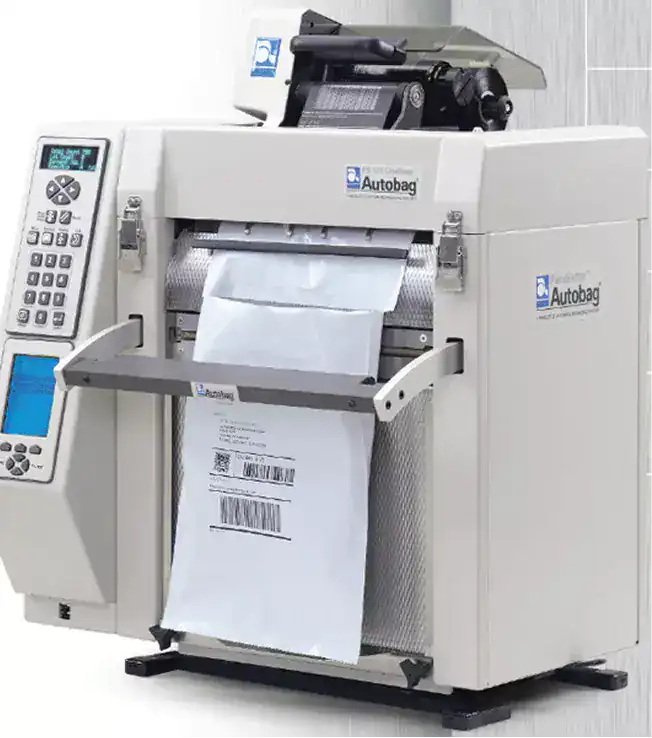
An automated bagging machine is an essential tool that quickly and efficiently fills and seals bags with products. The equipment can not only improve productivity but also provide better packaging quality and simplify ease of use.
Using bagging machines for manufacturing can effectively:
- Improve working conditions
- Lower labor costs
- Minimize operator fatigue
- Reduce the risk of human error
Automatic bagging machines require minimal manual intervention and are engineered to efficiently fill and seal bags for a broad range of industrial applications. The automated bagging process involves the following steps:
- Bag feeding. Rollstock or pre-opened bags are automatically loaded onto the equipment for filling.
- Bag filling. Products are placed directly into the bags, either manually or automatically, using conveyors, counters, or scales.
- Sealing and printing. Industrial bagging machines securely seal the bags and can apply a date, bar code, or printed label, as needed.
- Bag cutting. Bags are cut to the desired length and prepared for the next cycle.
- Bag dispensing. Completed bags are dispensed for further processing (sorting/boxing) or collection.
- Rollbag baggers. These machines process pre-opened bags on a roll and are ideal for high-speed applications in e-commerce, food, medical, and industrial packaging.
- Horizontal auto baggers. These machines form the bag around the product, ideal for items that require careful placement within the packaging.
- Vertical form fill seal (VFFS) machines. A vertical motion is used to transform a continuous roll of film into a durable bag that can be securely filled and sealed. This type of machine drops products into bags from above, making it suitable for bulk items that do not require precise placement. VFFS machines are commonly used for powders, granulated products, and snack foods.
The main difference between automatic and semi-automatic bagging machines is the need for human intervention. Automatic machines can handle the entire process of opening, filling, and sealing bags without operator involvement. Semi-automatic machines, however, require some operator intervention, such as manually placing items into pre-opened bags.

Automated bag filling machines can accommodate various bag sizes and are equipped to handle many different types of products, such as:
- Candy and confectionery
- Cosmetics
- Dietary supplements
- Dry dog food
- Novelty items
- Pharmaceuticals
- Small parts
- Snack foods
Packaging automation equipment can offer the following benefits, providing businesses with a scalable solution for streamlining their packaging processes:
- Enhances efficiency and overall productivity by cutting manual handling time at each stage of the packaging line.
- Ensures uniform packaging quality, so every bag meets the same fill weight, seal strength, and appearance standards.
- Includes advanced ergonomic features for safe operation, reducing repetitive strain and fatigue for operators working extended shifts.
- Increases throughput, allowing facilities to package higher volumes without adding headcount.
- Minimizes downtime through reliable, consistent operation that requires less troubleshooting than manual processes.
- Offers packaging versatility, adapting to different bag sizes, product types, and fill requirements as production needs change.
- Provides consistent seal quality, protecting products from contamination and reducing the risk of returns or rejected shipments.
- Reduces labor costs by automating tasks that would otherwise require multiple operators per line.
- Seamlessly integrates with production line equipment, connecting directly with upstream conveyors and downstream labeling or palletizing systems so products move through the facility without manual transfer between stages.
- Agriculture. Automated packaging systems are commonly used to contain feed, fertilizer, grains, seeds, and other agricultural products.
- E-commerce. Automatic bagging equipment can streamline packing and shipping tasks for e-commerce and fulfillment centers, filling and sealing novelty items, small toys, and jewelry into bags of various sizes.
- Food packaging. Industrial packaging automation is useful for sealing frozen, fresh, or dry goods with airtight protection.
- Food processing. The food processing industry relies on automated bag-filling machines to meet the demands of challenging packaging environments that typically require routine washdown protocols to maintain proper hygiene.
- Manufacturing and industrial. Bagging equipment can be used to bag parts, tools, machine parts, and fasteners. It can also be used to seal documents, dry chemicals, and other types of industrial materials.
- Medical equipment. Packaging automation systems are often used to meet the stringent requirements of sterile packaging for medical components and devices.
- Pharmaceutical. Open-mouth bagging systems are used to fill and seal prescription drug capsules and tablets into secure bags.

Automated packaging systems can handle the following types of bags in a wide variety of sizes:
- Clear stock bags
- White stock bags
- Clean towel system stock bags (CTS4000)
- Shop towel stock bags (AB 255)
- Crayex bags
- Crayex sheeting
At Practical Packaging Solutions, we partner with ISO-certified suppliers to provide high-quality bag materials that are uniform and reliable, meeting the standards our customers expect from our products.
Our automated bag-filling machines are operationally flexible and, depending on the model the project requires, can bag items with an impressive speed of up to 120 bags per minute.
Packaging automation equipment can effectively reduce packaging time by up to 50% or more, providing a reliable and consistent seal that minimizes material waste. Automatic bagging machines can also be integrated with existing production and labeling systems for seamless automation of the following tasks:
- Creating bags according to the product type
- Filling bags with weighted products
- Accurately counting the number of packages produced during a cycle
- Brand and model of the automatic bag-filling
equipment - Budgetary requirements
- Compliance with quality and regulatory standards
- Power consumption requirements
- Production capacity
- Rate of required bagging accuracy
- Safety features that protect the operator, equipment, and products
- Space availability in the manufacturing facility
- Technological advancements and features that can improve productivity
- Types of bags the equipment can accommodate
- Potential for scalability
The cost of bagging machines for manufacturing purposes can vary greatly depending on the application, ranging from $1,500 to $150,000+. Factors that influence the total cost can include the automation level, speed, and advanced features.
Yes, industrial packaging machines can be fully integrated with automated bagging systems to create seamless, end-to-end production lines that connect with upstream equipment and downstream systems for efficient feeding, filling, sealing, and labeling.
Based in Glendale Heights, IL, Practical Packaging Solutions can enhance packaging processes, helping businesses choose the appropriate industrial bagging machines for their specific applications. With over 100 years of combined experience, our skilled team has the knowledge and expertise to provide customer-specific solutions. For emergency equipment needs, we aim to dispatch a service technician within 24 hours.
Practical Packaging Solutions is a premier distributor of high-performance automated bagging systems, turnkey automated packaging lines, and packaging supplies. Our technologically advanced equipment is designed to streamline operations, improve efficiency, and enhance our customers’ bottom line.
Industrial and commercial businesses rely on our cutting-edge semi-automatic and fully automatic bagging machines to securely package products while minimizing human error and reducing labor costs.
Contact Practical Packaging Solutions
Contact us today to find a system that meets your unique project needs and budgetary requirements. You can also request information about a specific automated bagging system.